
Patagonia Lithium Ltd (ASX: PL3) — Outstanding Packer Flow Rates at Cilon Well 8
27 July 2026
Price Sensitive Announcement $
Highlights:
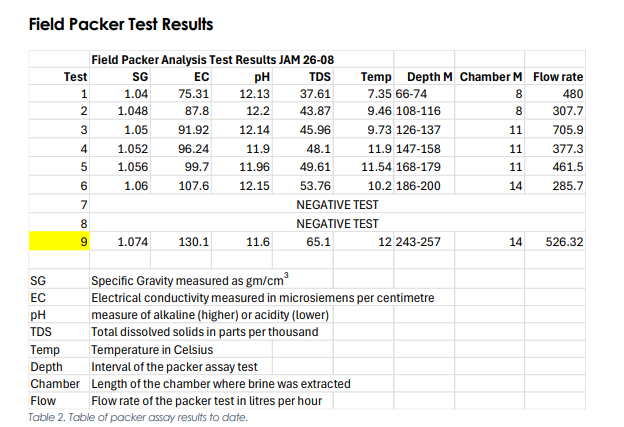
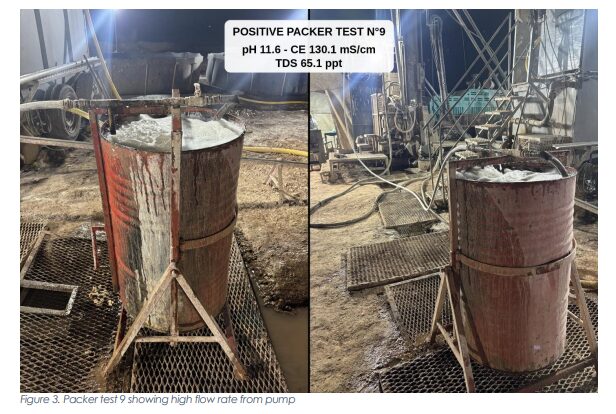
- Drilling at Well 8 (JAM 26-08) has reached 257m depth, with the ninth packer test returning an excellent flow rate of 526L/hr from the 243–257m interval
- Seven of nine packer tests completed to date have been successful, with peak flow rates of up to 705.9L/hr recorded at the 126–137m interval
- Specific gravity has increased to 1.074g/cm³, reflecting increasing total dissolved solids and a positive trend for lithium brine concentration with depth
- An aquifer cap at the 226m depth interval — created by failed packer tests at the 7th and 8th positions — provides critical insulation against fresh water dilution, helping concentrate lithium and total dissolved solids in the aquifer below
- The primary zone of interest remains between 250m and 400m+, where the aquifer is expected to have concentrated lithium to its highest levels
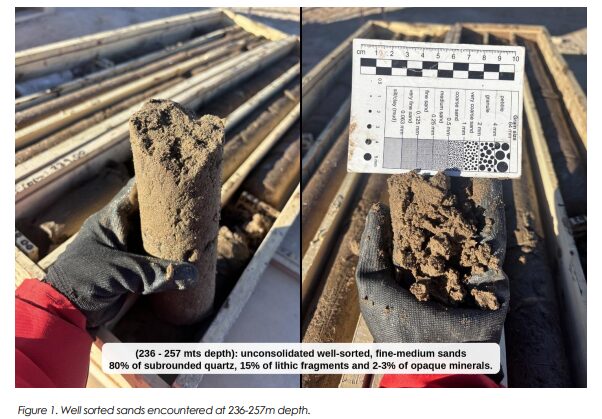
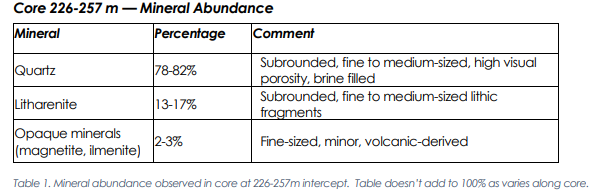
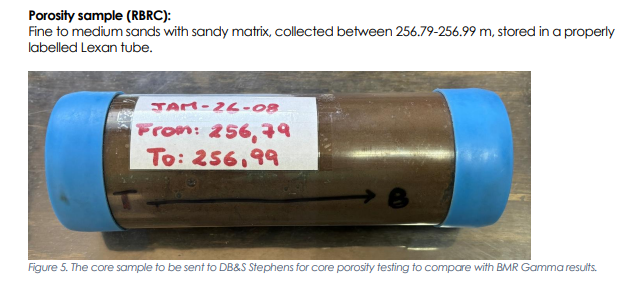
- The ninth packer interval (243–257m) encountered well-sorted, high-porosity, unconsolidated fine to medium brown sands, composed predominantly of subrounded quartz (~80%), interpreted as a distal alluvial fan sand body with excellent transmissivity
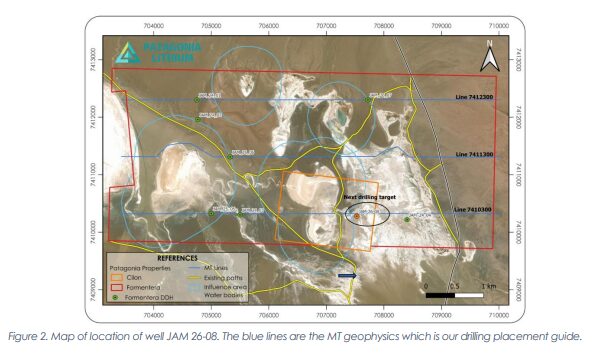
- The next packer test will be conducted at 280m depth, with the well targeting a final depth of 600m
Overview:
Patagonia Lithium has delivered another encouraging operational update from Cilon Well 8 in Argentina, with the ninth packer test returning a strong 526L/hr flow rate from the 243–257m interval and specific gravity readings continuing to trend upward — both positive indicators for the concentration of lithium-bearing brine at depth.
The ninth packer test was conducted over a 14m chamber within a highly porous, well-sorted sand interval dominated by subrounded quartz (~80%) with lithic fragments (~15%). The absence of carbonate cementation in this unit contributed directly to the high porosity and transmissivity that produced the strong flow result. Electrical conductivity, total dissolved solids and specific gravity are all increasing progressively with depth — a pattern consistent with brine residence time and the progressive dissolution of evaporitic minerals, reflecting volcanic influence on brine chemistry through leaching of feldspars and sericite from the volcanic column.
Particularly significant from a project development perspective is the natural aquifer cap created at the 226m depth interval, where failed packer tests at positions seven and eight indicate cementation of sands that effectively seals the deeper brine from dilution by shallower fresh groundwater. This cap insulates the deeper aquifer — where lithium concentrations are expected to be highest — and enhances the quality of the brine accumulation the Company is targeting between 250m and 400m+.
With the well currently at 257m and targeting a final depth of 600m, Patagonia still has considerable depth to test before reaching its primary zone of interest. Borehole Magnetic Resonance and Gamma testing are being used to determine porosity in conjunction with physical core porosity testing, while brine samples from the ninth packer test have been submitted for lithium assay, with results expected in three to four weeks.
Company Notes:
Patagonia Lithium Executive Chairman, Phillip Thomas, commented: “We continue to achieve very good pumping rates on our packer assay tests indicating the strength of the aquifer. The ninth packer test results are extremely positive and the specific gravity increased to 1.074 gm/cm3 – which is positive for lithium. The main zone of interest is between 250m to 400m+ as this is where the aquifer is likely to have concentrated the lithium. The failure of the packer tests at 7th and 8th tests is very positive as it provides a cap for the aquifer to concentrate lithium and total dissolved solids under and insulates against ground water dilution seeping in.”
About Patagonia Lithium Ltd (ASX: PL3):
Patagonia Lithium is an ASX-listed lithium brine exploration company advancing its Cilon Project in Argentina, targeting lithium-bearing brine aquifers within the highly prospective South American lithium triangle. The Company’s current well program at Cilon Well 8 is systematically testing brine flow rates and chemistry with depth, building toward a comprehensive understanding of the aquifer system’s lithium endowment and development potential.
Disclaimer: This article is based on a company ASX announcement and is intended for general informational purposes only. It does not constitute financial advice. The Stock Connect may receive fees for content services. Readers should conduct their own research and consult a licensed financial advisor before making any investment decisions.
Full ASX Announcement: Patagonia Lithium Ltd Full ASX Announcement